How to Make Lash Extensions Last Longer: Lash Glue & Retention Guide
Updated: Sep 27

Lash retention is one of the biggest concerns for both lash artists and their clients. When a set doesn’t last as expected, it’s easy to assume the lash glue is the problem. In reality, professional lash retention depends on much more than the adhesive itself. Preparation, application technique, salon conditions, adhesive freshness, storage and client aftercare can all influence how long eyelash extensions last.
How to Make Lash Extensions Last Longer?
Knowing how to make lash extensions last longer starts with understanding that retention depends on more than lash glue alone. Natural lash preparation, application technique, temperature and humidity, adhesive freshness, storage and client aftercare can all affect how well a set lasts.
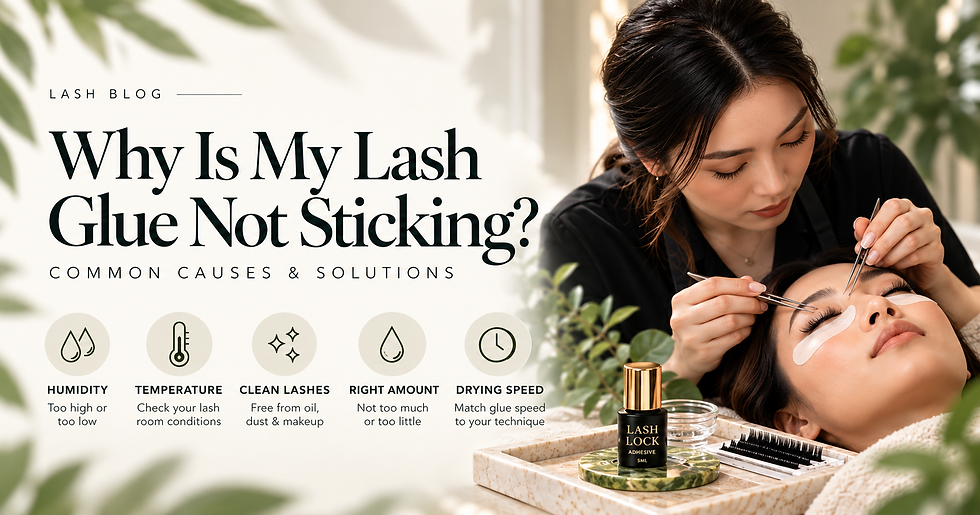
When retention is poor, the adhesive is often the first thing we blame. However, the cause could be residue on the natural lashes, a glue that cures too quickly for the artist’s working speed, changing salon conditions or insufficient attachment. Before switching adhesives, look at the entire application process to identify what may be affecting retention.
Clean Natural Lashes Before Application
Good lash retention begins before the first extension is applied. Natural lashes should be clean and free from makeup, skincare residue, oils and other buildup that could interfere with the adhesive bond. Lash shampoo can be used to thoroughly cleanse the lashes before application, while lash primer may be useful when additional preparation is required. The aim is to create a clean surface that allows the lash adhesive to form a proper bond with the natural lash.
Choose a Lash Glue That Matches Your Working Speed
The fastest lash glue isn’t necessarily the best lash glue for every artist. If an adhesive cures faster than you can comfortably position and attach the extension, it may begin curing before sufficient attachment is achieved. LashLock 04 Sensitive offers a 3–5 second drying time, 03 Control approximately 2–3 seconds, 02 Fast around 1 second and 01 Ultra Fast approximately 0.5–1 second for advanced artists working at speed. Choosing a drying speed that matches your technique can help you achieve more controlled and consistent attachment.
Monitor Temperature and Humidity
Temperature and humidity can affect how conventional eyelash extension adhesives behave and cure. This is especially relevant in humid climates such as Singapore, where outdoor humidity can be high while air-conditioned salons may create very different indoor conditions. Using a hygrometer can help lash artists understand the actual environment around their lash bed. If your adhesive suddenly seems faster or slower than usual, checking the room conditions should be part of your troubleshooting process.
Good Attachment Is Essential for Lash Retention
Even a high-performing professional lash glue cannot compensate for poor attachment. The extension needs sufficient contact with the natural lash for a secure bond to form. Placement should be clean and controlled, using an appropriate amount of adhesive for your technique. Too little adhesive may result in insufficient bonding, while excessive adhesive isn’t necessarily better. Consistent isolation, placement and attachment remain essential parts of achieving reliable retention.
Keep Your Lash Glue Fresh
Professional lash adhesive changes over time after opening, which makes tracking the age of your bottle important. LashLock 01 Ultra Fast, 02 Fast, 03 Control and 04 Sensitive adhesives have a shelf life of up to 6 months unopened and should be used within 3 months after opening, subject to proper storage and the expiry information stated on the product. LashLock LED adhesive has a shelf life of up to 3 months unopened and 1 month after opening. Writing the opening date on your bottle is a simple way to keep track of when it should be replaced.
Store Lash Glue Correctly
Correct storage helps maintain the condition of your adhesive throughout its recommended usage period. Always follow the storage instructions for the specific formula, keep the bottle properly closed when it isn’t being used and avoid unnecessary exposure to heat, moisture or unsuitable conditions. Keeping the nozzle clean also helps ensure that the cap can close properly between appointments.
Client Aftercare Can Affect Lash Retention
Retention doesn’t end when the appointment is finished. Clients should keep their extensions clean and follow the aftercare advice provided by their lash artist. Regular cleansing with an appropriate lash shampoo can help remove makeup, oils and everyday buildup around the lash line. Clients should also avoid unnecessary pulling, picking or rubbing of their extensions. Good retention is ultimately a combination of professional application and proper maintenance at home.
How to Troubleshoot Poor Lash Retention
If a client experiences unexpected lash loss, look at the entire process before assuming the adhesive has failed. Consider the condition and preparation of the natural lashes, whether your lash glue matches your working speed, whether temperature or humidity changed, whether attachment was consistent and whether your adhesive was fresh and stored correctly. Client habits and the natural lash growth cycle should also be considered. Looking at the complete process makes it easier to identify the actual cause of poor retention.
Better Lash Retention Comes From Consistency
There isn’t one single trick that guarantees longer-lasting eyelash extensions. Consistent results come from clean preparation, choosing an appropriate lash adhesive, monitoring your working environment, achieving good attachment, storing your glue correctly and educating clients about aftercare. The best lash glue is ultimately one that works with your technique, speed and salon environment rather than against them.

Comments